
Why the A-frame works
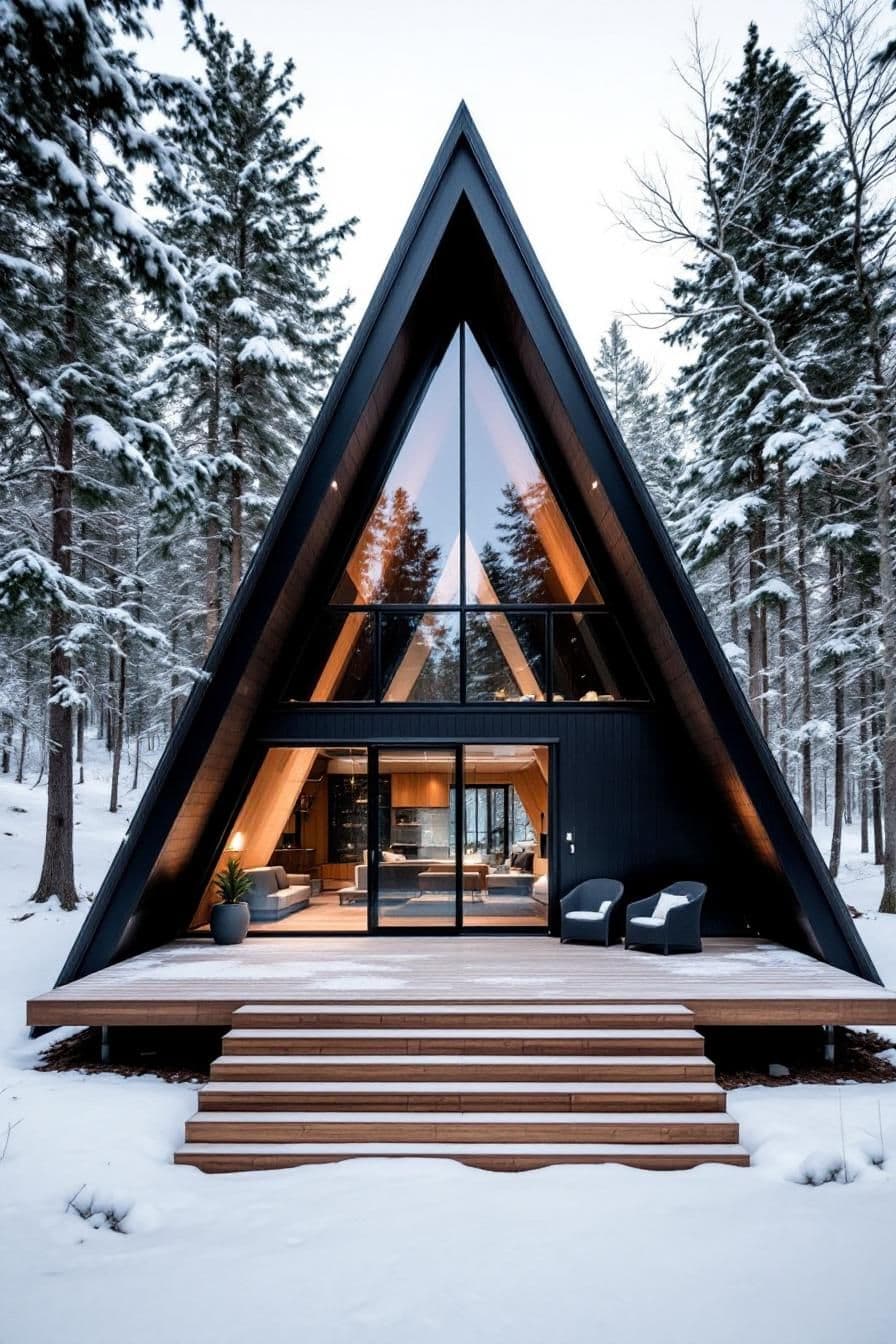
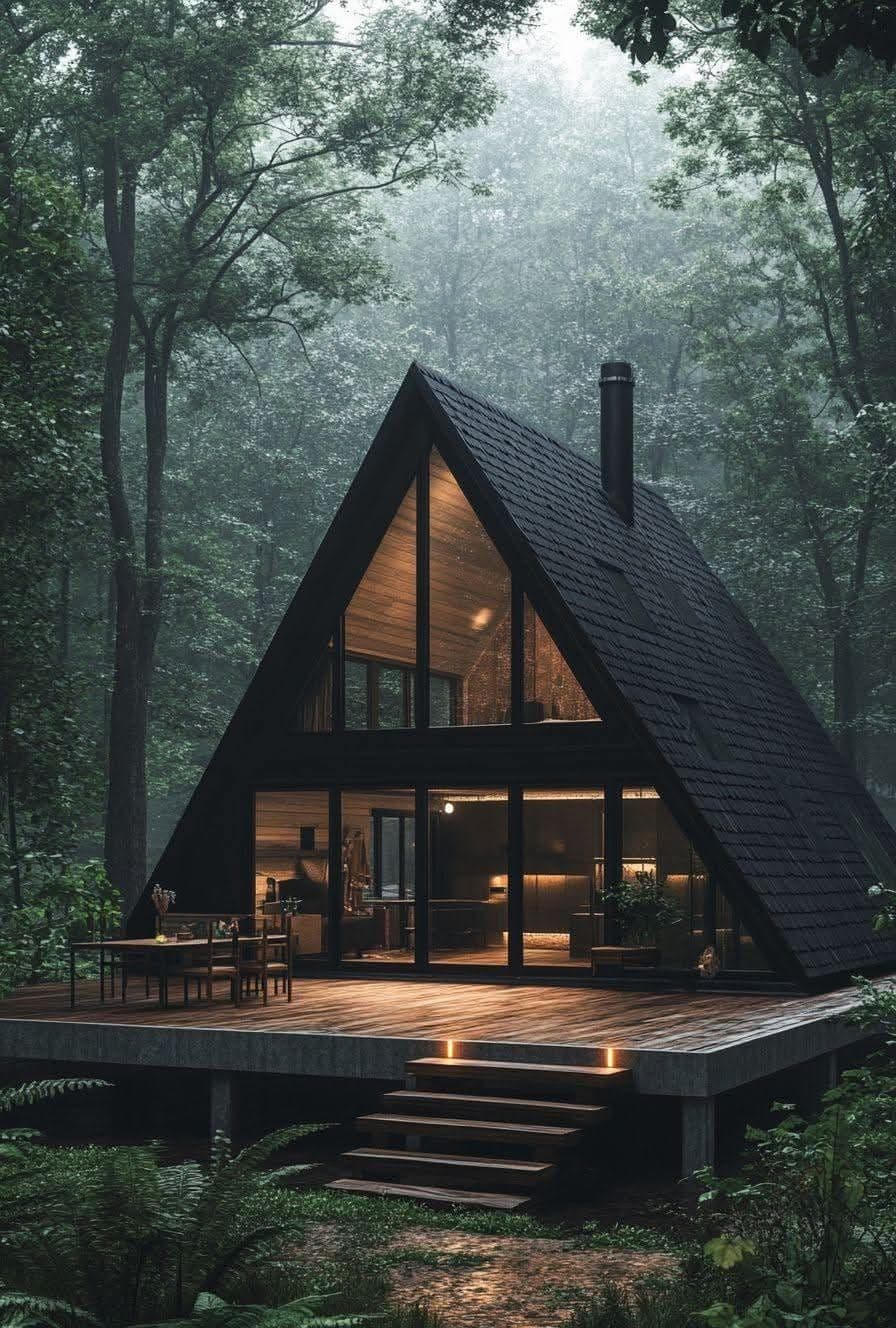
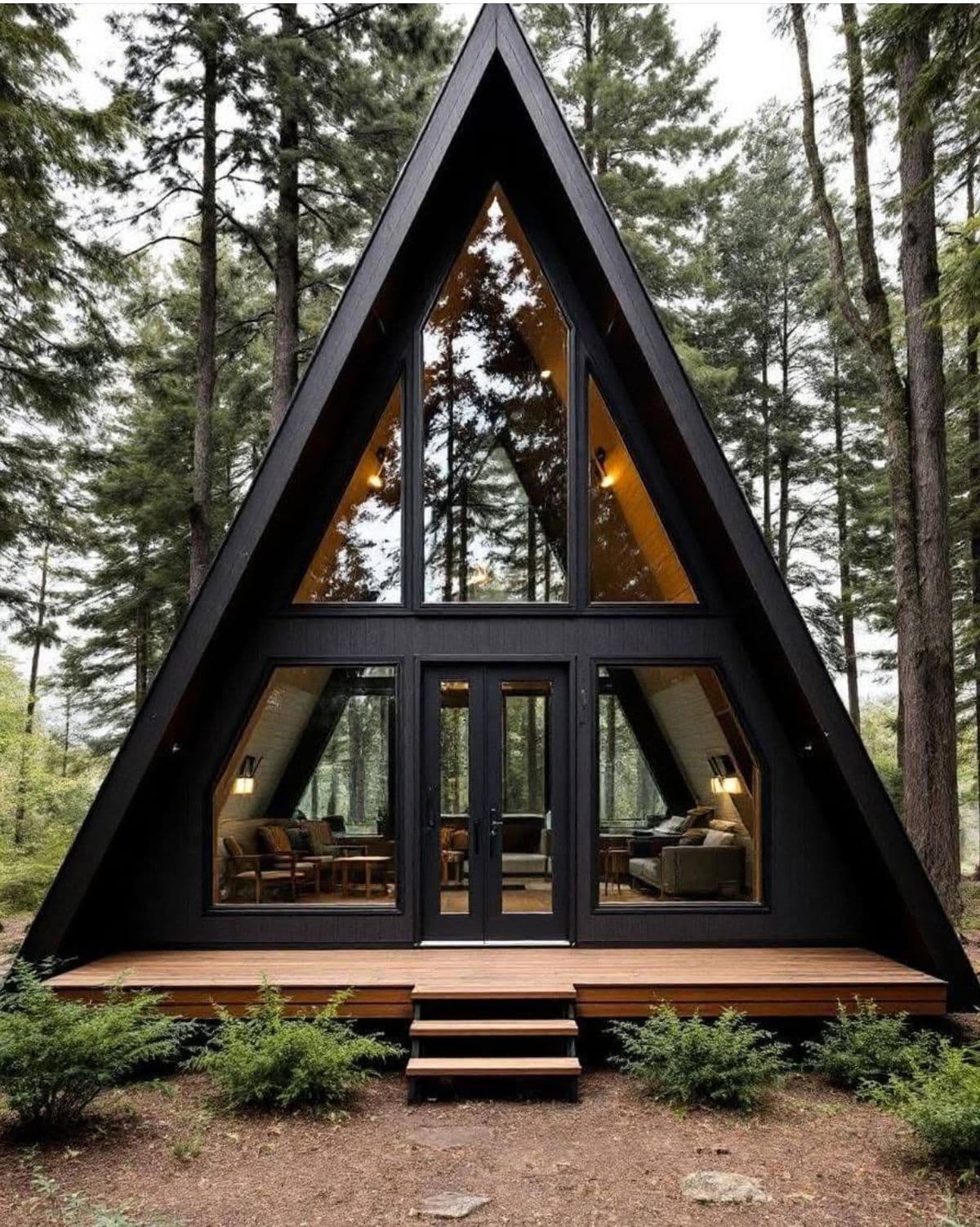
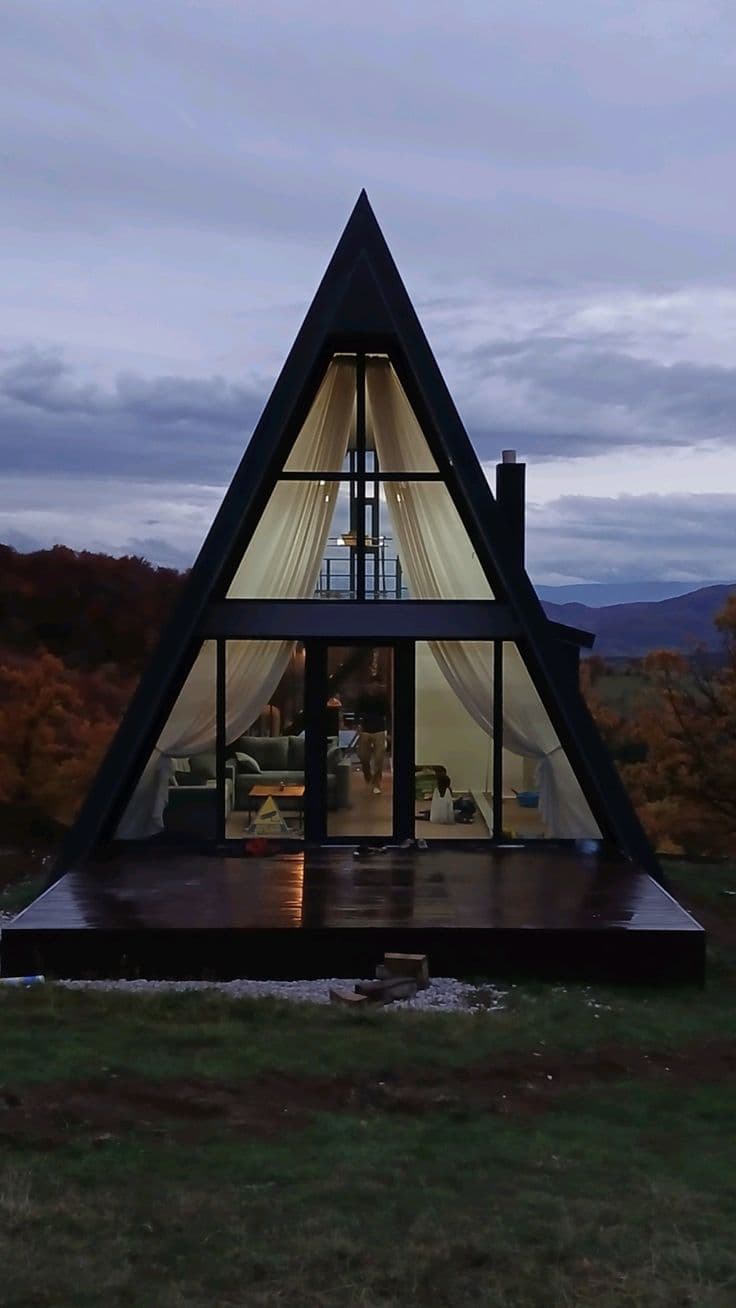
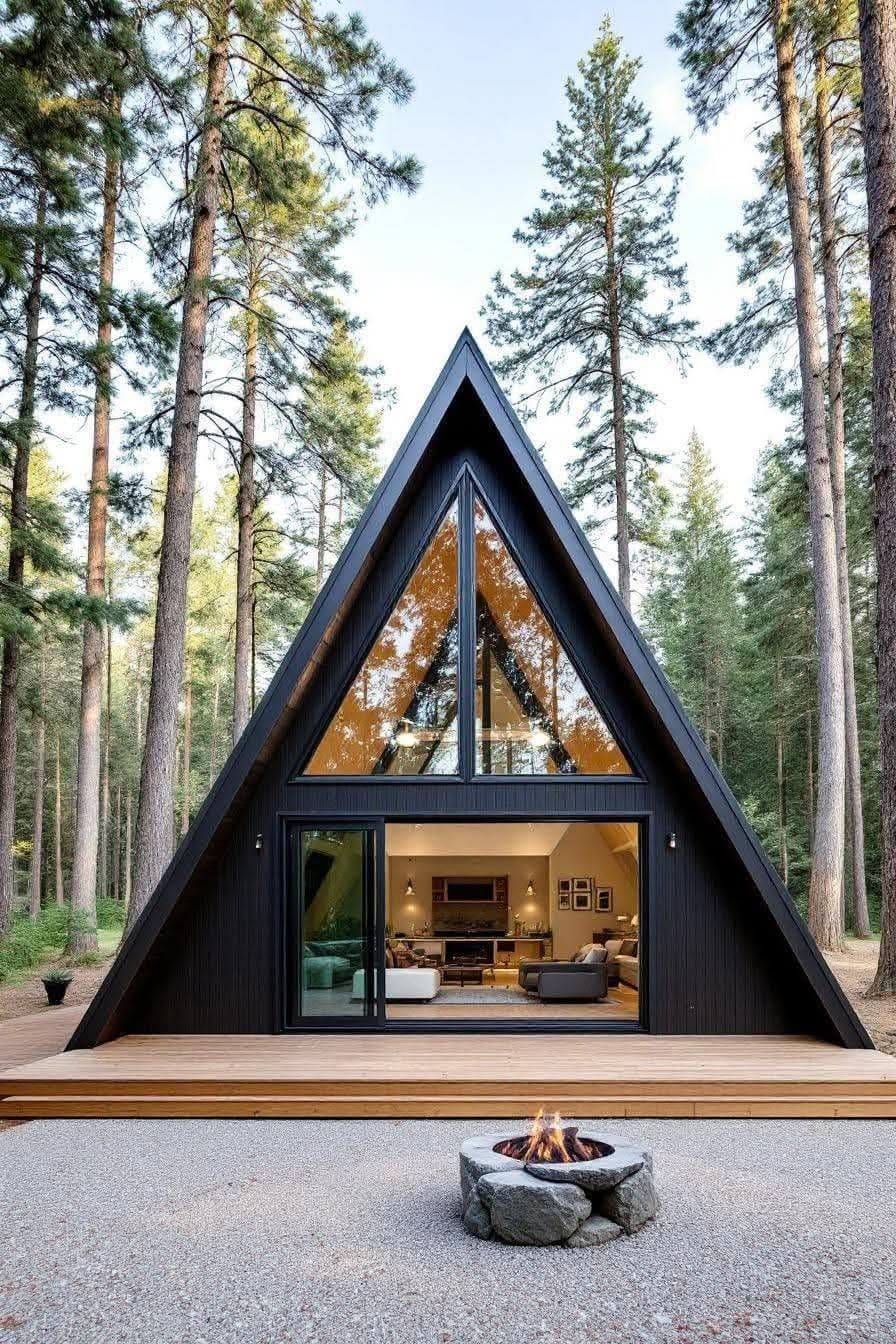
The A-frame is the oldest engineered cabin shape that still makes sense today. The triangular profile sheds snow, rain and falling debris without help. The steep roof opens internal volume without complex roof engineering. The front gable becomes a wall of glass facing whatever view the site offers.
For a small, well-built cabin in a forest clearing, almost no other shape competes. Square cabins waste material on flat-roof drainage. Boxy lodges look industrial against a tree line. The A-frame disappears into the canopy at distance and reads as architecture up close.
Materials and finish
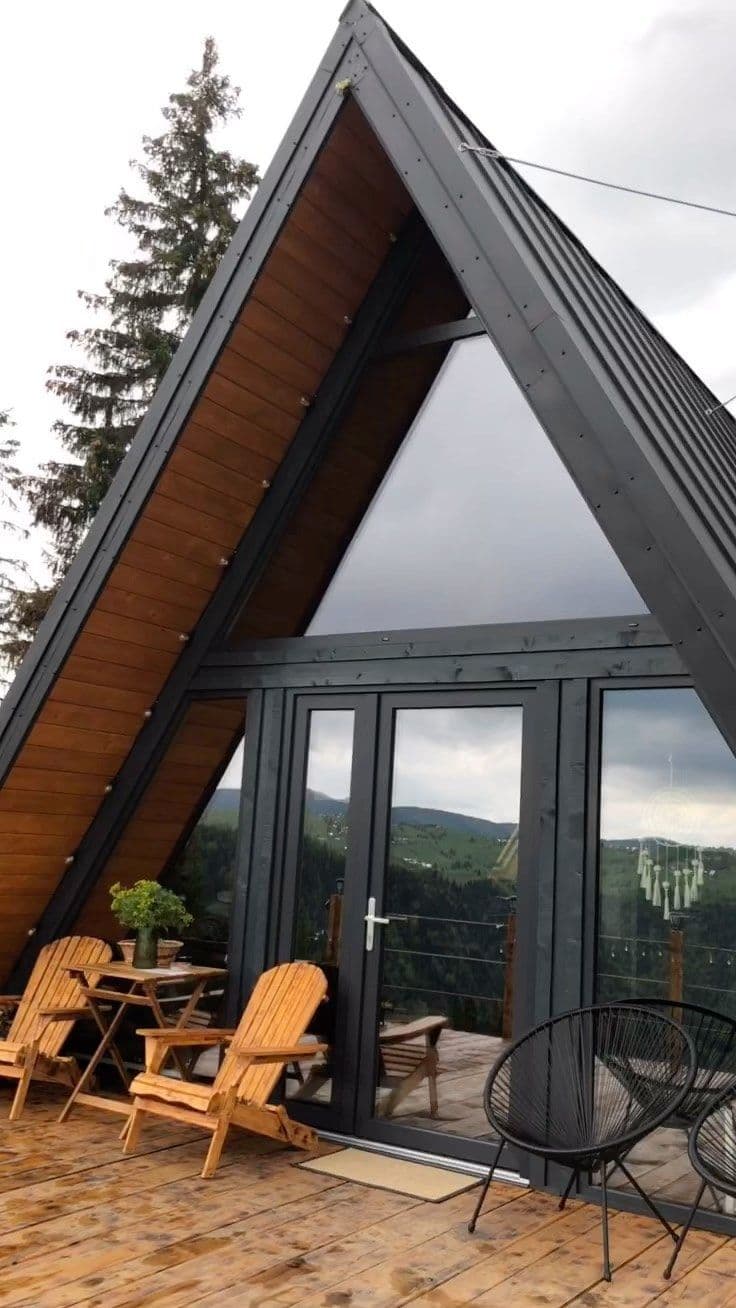
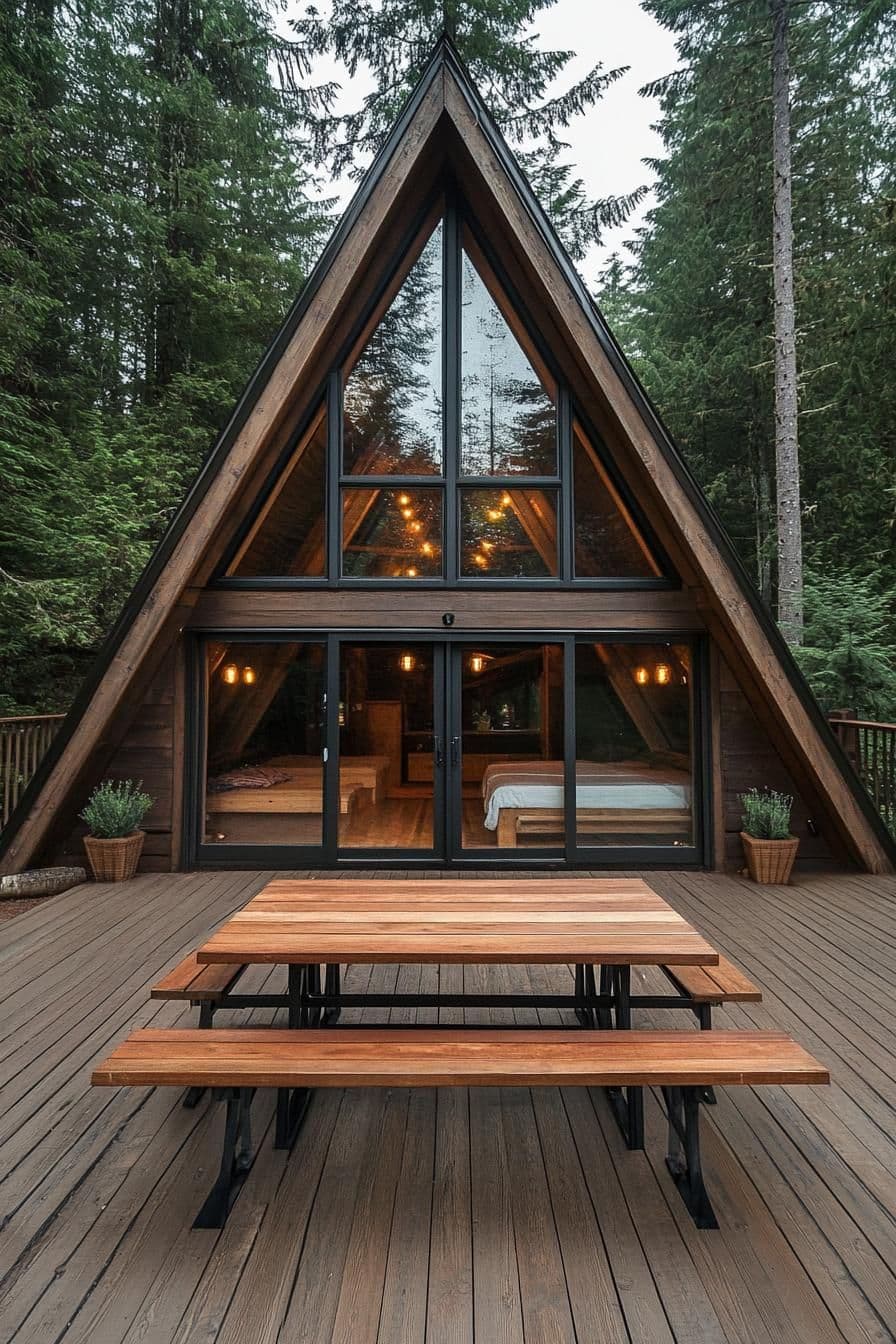
Otium A-frames use a timber-stud frame on a steel-and-concrete pad, clad in black-stained Scots pine. The roof is standing-seam steel, also black. The front gable is bifold glass with powder-coated steel frames — black on black. The deck is untreated larch that silvers over the first two seasons.
The dark palette is deliberate: it patinas well, it disappears at distance, and it photographs well in any light. The interior is warm pine throughout to keep the contrast.
Inside the cabin
Open-plan ground floor with the bifold doors as the front wall. A wood burner in one corner, a small kitchen against the back wall, a dining table that seats four. To one side, a wood-fired shower-room and composting toilet. A ladder leads to a sleeping platform in the apex with a queen bed under a long roof window — best place in the cabin for the dark sky overhead.
The seven Otium A-frames
Where else to find UK A-frames
If Otium does not have availability when you need it, Canopy & Stars and Host Unusual both list a small number of A-frame cabins across the UK. Most are single owner-operated sites rather than networks. Quality varies — many are timber-clad in lighter finishes, sited closer to roads and not off-grid.
Frequently asked questions
Why an A-frame and not a normal cabin?
The A-frame is the most efficient cabin shape for sloped, forested ground. The triangular profile sheds snow and rain, the steep roof opens up internal volume without expensive engineering, and the front gable of glass turns the trees into the main feature. It is also one of the few modern shapes that does not look out of place in a working forest.
How big is an A-frame cabin?
Otium A-frames are built for two to four people. Open-plan ground floor with bifold glass doors to the deck, a sleeping platform in the apex with a queen bed, a wood burner in the corner and a wood-fired hot water shower-room to one side. Compact by design.
Are A-frame cabins warm in winter?
Yes — better than most rectangular cabins. The steep roof traps heat from the wood burner up in the apex, and the high insulation values of the modern timber-frame build hold it overnight. The bedroom in the apex is the warmest part of the cabin.
Where can I book an A-frame stay in the UK?
Otium operates seven across England, Wales and Scotland. Other UK A-frames are listed via Canopy & Stars, Host Unusual and Unplugged — most are single sites rather than networks. Otium A-frames are off-grid, 4WD-only and conservation-funded; broader platforms cover a wider range of styles.
Why are Otium A-frames painted black?
Black-stained timber and black-framed glass — partly aesthetic, partly practical. Dark cladding takes natural patina better than pale finishes, hides forest grime between cleans, and disappears into the canopy at distance. The glass frames are powder-coated steel for the same reason.